

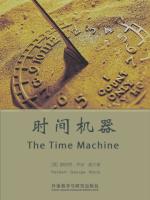
The Time Machine
“The Time Machine” by Herbert George Wells is a seminal work in the science fiction genre, first published in 1895. This novel is renowned for its innovative concept of time travel and its depiction of a future world, exerting a significant influence on subsequent science fiction writers.
The story follows a Victorian-era scientist and inventor who creates a machine capable of traversing time and journeys to the year 802,701 AD. In this futuristic setting, humanity has evolved into two distinct races: the Eloi, who are beautiful and lead a life of leisure but lack rationality and other qualities, and the Morlocks, who dwell underground, resemble apes, and prey on the Eloi. Through this setup, Wells explores social classes, equality, and the potential trajectory of human civilization.
Reviews note that Wells incorporated popular scientific and social theories of the time into “The Time Machine,” particularly Darwin’s theory of natural selection and Marx’s social theories. Wells uses the novel to offer profound reflections on the progress of technology and society, warning against over-reliance on technology and machinery while also expressing a reverence for the forces of nature.
From a literary perspective, “The Time Machine” may be concise in length, but its importance in the realm of science fiction cannot be overstated. It is not only the work that established Wells’ reputation but is also considered the harbinger of modern science fiction. Although Wells’ later works exhibit greater literary sophistication, the impact of “The Time Machine” in exploring futuristic worlds and scientific concepts remains significant.
Overall, “The Time Machine” is a classic worth reading. It laid the foundation for science fiction literature and provides deep insights into human society and potential futures.


 京公网安备 11010802032529号