

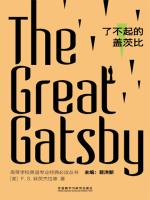
The Great Gatsby
枝枝莓莓
F. Scott Fitzgerald’s The Great Gatsby is far more than a tragic love
story—it is a searing critique of the hollow American Dream. Set in the
glittering yet soulless Jazz Age, the novel follows Jay Gatsby, a
self-made millionaire who chases his lost love Daisy with lavish parties
and opulent wealth, only to be crushed by the indifference of the
old-money elite he longs to join. Gatsby’s obsession is a metaphor for a
nation seduced by the illusion of prosperity and happiness. Fitzgerald
masterfully uses symbols like the green light at the end of Daisy’s
dock— a beacon of hope that fades into nothingness—to underscore the
emptiness of material pursuit. The novel’s closing line, “So we beat on,
boats against the current, borne back ceaselessly into the past,”
lingers in the mind, capturing the futility of chasing a dream that was
never meant to be. Taut, poetic, and haunting, The Great Gatsby remains
a timeless masterpiece that exposes the gap between ambition and reality.

 京公网安备 11010802032529号