

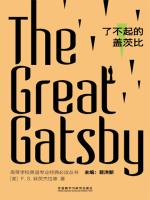
The Great Gatsby
用户848412
The Illusory American Dream in The Great Gatsby F. Scott Fitzgerald’s
The Great Gatsby is far more than a tragic love story; it is a searing
critique of the hollow American Dream that defined the Roaring Twenties.
At the heart of the novel stands Jay Gatsby, a self-made millionaire
whose opulent parties and lavish lifestyle mask a singular, desperate
obsession: winning back Daisy Buchanan, the privileged debutante who
once broke his heart. Gatsby’s wealth—amassed through shadowy
dealings—is not an end in itself, but a means to recreate the past, to
erase the years of separation and the social chasm between them. He
believes that with enough money and grandeur, he can turn his dreams
into reality, yet Fitzgerald masterfully exposes the futility of this
pursuit. Daisy, with her “voice full of money,” embodies the emptiness
of the elite world Gatsby craves. She is charming yet shallow, a
prisoner of her own privilege who chooses security over love, and her
betrayal is the final blow to Gatsby’s fragile illusion. The novel’s
iconic green light at the end of Daisy’s dock becomes a powerful symbol
of the unattainable— a beacon of hope that Gatsby reaches for, but can
never touch. It represents not just Daisy, but the broader American
Dream: the promise of success, happiness, and reinvention that lures
people in, yet often crumbles in the face of greed, corruption, and
social inequality. What makes The Great Gatsby enduring is its
unflinching look at the dark underbelly of the Jazz Age. The glittering
parties, the extravagant wealth, and the carefree attitudes of
characters like Tom and Daisy Buchanan hide a world of moral decay. When
Gatsby dies, few attend his funeral—a stark contrast to the crowds that
flocked to his parties—revealing the superficiality of the relationships
he cultivated. Fitzgerald’s prose is lyrical and haunting, capturing
both the glamour and the despair of an era. He does not condemn Gatsby;
instead, he elevates him as a tragic hero, a man who dared to dream in a
world that had lost the capacity to believe in anything real. In the
end, The Great Gatsby is a timeless reminder that the pursuit of wealth
and status, when divorced from authenticity and human connection, leads
only to disillusionment. The green light fades, the parties end, and the
American Dream—for Gatsby, and for so many like him—proves to be nothing
more than a beautiful, devastating illusion.

 京公网安备 11010802032529号