


书评
深深时时小美满
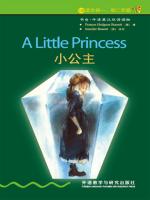
Rereading A Little Princess from the Oxford Bookworms Library, unlike my
childhood amazement at Sara’s "lucky reversal", as a freshman,
I have gleaned the core of being a "spiritual aristocrat" from
this seemingly fairy-tale story. Frances Hodgson Burnett depicts Sara,
who falls from a spoiled darling of a boarding school to a starving
maid. This huge drop in status becomes a mirror reflecting human nature
and dignity, elevating the little girl’s image beyond the shallowness of
children’s literature to a classic model of "nobility".
Sara’s identity as a "princess" has never been tied to wealth.
When she first entered the school, her loveliness and intelligence
earned her the title of "princess", but this recognition was
mostly due to material blessings. However, after her father’s bankruptcy
and death, she was treated as a servant by Miss Minchin, living in a
cold attic and doing heavy labor, yet she still upheld her inner
"princess code" – she would share her only bread with a beggar
girl on the street, tell beautiful stories to her friends on cold
nights, and straighten her back when humiliated, saying, "I am a
princess in my heart always". This unyielding dignity in suffering
and unchanging kindness regardless of circumstances is Sara’s true
"princess aura". In her, I see a maturity beyond her years:
true nobility never lies in external material accumulation, but in the
upbringing engraved in one’s bones and the commitment to humanity. The
story’s exploration of "wealth and value" also strikes a chord
with me as a freshman in the formative period of my values. Miss
Minchin’s abrupt shift from ingratiating to contemptuous towards Sara
lays bare the utilitarianism of money-worship. In contrast, even in
poverty, Sara could find beauty in life – the attic mouse became her
"friend", and the tattered blanket was imagined as a gorgeous
cloak. This ability to perceive happiness in adversity and uphold
spiritual abundance is exactly what young people today tend to lack. We
are always swept up by external material standards, obsessing over what
we possess, yet forgetting that inner richness is the eternal wealth.
Sara’s experience serves as a reminder: no matter the circumstances,
maintaining spiritual independence and a kind heart makes us the masters
of our own lives. As a classic of children’s literature, A Little
Princess is more than just an inspiring story. Through a child’s eyes,
it tears away the utilitarianism and hypocrisy of the adult world, and
sets a benchmark for being a "spiritual aristocrat". For me, a
freshman about to face more life challenges, Sara’s story is a precious
revelation: in the future, we may encounter academic pressure, life
setbacks, or even an "identity fall" like Sara’s. But as long
as we keep kindness and dignity in our hearts, and always maintain love
for life and goodwill towards others, we will always be our own
"little princesses". Though short, this little book is like
a warm pearl, shining brightly through the years. It makes me understand
that true growth is not about having more, but about becoming a better
version of oneself.

 京公网安备 11010802032529号