


读后感
用户823532
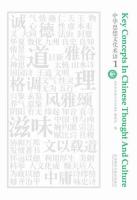
Key
Concepts in Chinese Thought and Culture I is far more than aglossary
of terms; it is a lucid, profound gateway to the intellectualbedrock
of Chinese civilization, tailored perfectly for both Westernreaders
and English-speaking Chinese learners eager to grasp the essenceof
traditional philosophy. What makes this book stand out is
itsmeticulous balance of accuracy and accessibility. Instead of
offeringdry, literal translations, each entry unpacks the cultural
andhistorical context of core concepts—from ren (benevolence) and
li(ritual propriety) in Confucianism to wuwei (non-action) in Taoism
andyin-yang (dualism) in classical cosmology. The authors pair
cleardefinitions with illustrative examples from ancient texts like
theAnalects and Tao Te Ching, while also explaining how these ideas
haveshaped Chinese ethics, social norms, and even modern mindsets.
Thebook’s structure is another strength, organizing terms
thematicallyrather than alphabetically to highlight interconnected
ideas, making iteasy to trace how different schools of thought
dialogue and diverge. Aminor shortcoming is that it could include more
contemporaryapplications of these concepts, but this does little to
diminish itsvalue. In essence, Key Concepts in Chinese Thought and
Culture I is anindispensable tool for anyone seeking to bridge
cultural gaps andunderstand the timeless wisdom that has guided China
for millennia.

 京公网安备 11010802032529号