

Timeless Wisdom in P
用户866797
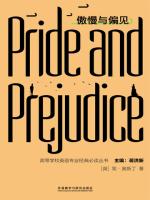
Jane Austen’s Pride and Prejudice, first published in 1813, is far
more than a classic love story—it is a witty and insightful critique of
social class, gender roles, and human nature in 19th-century England.
With its sharp dialogue, vivid characters, and timeless themes, this
novel continues to captivate readers worldwide, earning its place as one
of the most beloved works of English literature. At the heart of the
story lies the complex relationship between Elizabeth Bennet and
Fitzwilliam Darcy. Elizabeth, the intelligent and spirited second
daughter of a country gentleman, is defined by her quick wit and refusal
to conform to societal expectations of women. Darcy, a wealthy and
reserved aristocrat, carries the weight of pride—his disdain for those
he deems beneath him initially alienates Elizabeth. Meanwhile,
Elizabeth’s own prejudice blinds her to Darcy’s true character,
especially after she is manipulated by the charming but deceitful George
Wickham. Their journey from mutual misunderstanding to genuine affection
is the novel’s emotional core, and Austen masterfully weaves their story
with humor and heart. What makes Pride and Prejudice truly remarkable
is Austen’s razor-sharp social commentary. She satirizes the absurdity
of the marriage market, where women’s worth is often reduced to their
beauty and dowry. The Bennet sisters’ mother, Mrs. Bennet, is a comical
yet tragic figure whose sole obsession is marrying off her daughters to
wealthy men—a reflection of the limited options available to women in
Austen’s time. Austen also critiques class snobbery through characters
like Lady Catherine de Bourgh, whose arrogance stems from her title and
fortune, and shows how true worth lies in kindness, integrity, and
humility. Austen’s writing style is another highlight of the novel.
Her prose is elegant, concise, and filled with dry humor. The famous
opening line—“It is a truth universally acknowledged, that a single man
in possession of a good fortune, must be in want of a wife”—is a perfect
example of her irony, setting the tone for the story’s exploration of
love and marriage. She also excels at creating memorable characters,
from the playful Lydia Bennet to the sensible Charlotte Lucas, each of
whom adds depth to the story’s themes. Beyond its social commentary,
Pride and Prejudice endures because of its universal message about
overcoming pride and prejudice. Elizabeth and Darcy’s growth—her
learning to look beyond first impressions, his learning to let go of his
arrogance—resonates with readers of all ages. Their love story is not
about grand gestures or passion at first sight; it is about mutual
respect, understanding, and self-improvement—a love built on equality
and honesty. In conclusion, Pride and Prejudice is a masterpiece that
transcends time and genre. It is a delightful romance, a clever social
satire, and a profound exploration of human flaws and virtues. Jane
Austen’s keen observation of human nature and her ability to blend humor
with heart make this novel a must-read for anyone who appreciates great
literature. More than two centuries after its publication, Pride and
Prejudice remains as fresh and relevant as ever, reminding us that true
love and respect are worth far more than wealth or status.

 京公网安备 11010802032529号