

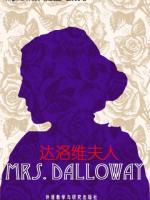
评《达洛维夫人》
用户867039
The Elegant Labyrinth: Consciousness and Constraint in Mrs. Dalloway
Virginia Woolf’s Mrs. Dalloway, a landmark of modernist literature,
accomplishes a remarkable feat. It compresses a lifetime of memory,
regret, and existential questioning into the span of a single day in
post-World War I London. Through the pioneering use of
stream-of-consciousness narrative, Woolf constructs an intricate
psychological portrait of Clarissa Dalloway, a society hostess preparing
for her evening party, revealing the profound tension between her
polished public persona and her vibrant, questioning inner self. The
novel’s plot is deceptively simple, tracing Clarissa’s movements through
London as she buys flowers and makes final preparations. Yet, this
outward journey is merely a frame for a rich interior voyage. Her day is
punctuated by the unexpected return of Peter Walsh, a passionate suitor
from her youth, which triggers a cascade of memories and forces her to
reflect on her choice of the reliable, conventional Richard Dalloway
over Peter’s unpredictable intensity. Parallel to Clarissa’s story runs
the tragic narrative of Septimus Warren Smith, a shell-shocked veteran
haunted by his wartime trauma. These two narratives, one of social
preservation and the other of psychological disintegration, never
directly intersect but are thematically intertwined, exploring different
responses to societal pressure and the fragility of the self. Woolf’s
genius lies in her revolutionary narrative technique. She masterfully
employs what critics term “free indirect discourse,” a style that blends
a character’s inner thoughts with the narrator’s voice, allowing readers
to experience the world directly through the characters’ perceptions.
For example, when Clarissa’s motives for hosting parties are questioned
by Peter and Richard, the narrative seamlessly channels her defiant,
internal rebuttal: “But they were wrong. She loved life itself”. This
technique dissolves the boundaries between external reality and internal
consciousness, creating a fluid, poetic tapestry of thought. Time
becomes psychological rather than chronological, as a present moment—the
backfiring of a motorcar on Bond Street—simultaneously transports
multiple characters into their private pasts. At its heart, the novel
is a poignant exploration of female identity and societal compromise.
Clarissa Dalloway is the quintessential “Angel in the House,” having
sublimated her youthful idealism and intellectual spark—represented by
her past friendship with the daring Sally Seton—into the socially
approved role of a politician’s wife and consummate hostess. Woolf
powerfully captures this inner conflict. Clarissa’s parties, for which
she is known, become a complex symbol: they are both her creative act of
bringing people together and a sign of her assimilation into a world of
superficial chatter. She feels “unable to be herself” at these events,
mourning the loss of her more authentic former self. Ultimately, Mrs.
Dalloway is a profound meditation on life, death, and the individual’s
struggle for authenticity in a rigid world. The news of Septimus’s
suicide, which reaches Clarissa at her party, does not horrify her but
instead instills a strange reverence; she sees in his desperate act a
commitment to preserving the purity of his soul, a stark contrast to her
own compromises. In this moment, Clarissa achieves a painful clarity
about the value of her own existence, however constrained. Woolf does
not offer easy answers but illuminates the silent battles fought behind
polite smiles, reminding us that an entire universe of memory, desire,
and despair can pulse beneath the surface of a single, ordinary day. The
novel remains a timeless masterpiece, not for its plot, but for its
breathtakingly intimate map of the human psyche.

 京公网安备 11010802032529号