

Review
用户824299
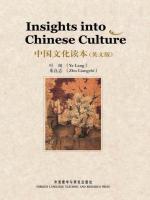
A Gateway to the Soul of China: A Review of A Cultural Reader of China
In a world that often views China through the narrow lens of headlines
and stereotypes, A Cultural Reader of China emerges as a luminous
bridge, connecting curious minds to the rich, layered tapestry of
Chinese civilization. This book is not a mere collection of facts or a
superficial glossary of traditions; it is a thoughtfully curated journey
that unfolds the essence of Chinese culture—from ancient philosophy to
modern innovations, from poetic landscapes to everyday rituals—with both
depth and accessibility. Spanning over 30 chapters, it caters to readers
ranging from students exploring global cultures to seasoned travelers
seeking a deeper understanding of the places they visit, and it does so
with a rare balance of scholarship and warmth. What immediately
strikes the reader is the book’s refusal to reduce Chinese culture to a
set of static, exotic symbols. Instead of fixating solely on the Great
Wall or pandas—icons that have become overused in Western narratives—it
delves into the ideas and values that have shaped China for millennia.
The sections on Confucianism, Taoism, and Buddhism, for instance, are
masterfully written: they avoid dense academic jargon and instead
explain how these philosophies influence daily life—from the emphasis on
filial piety (xiào) in family dynamics to the Taoist principle of wu wei
(effortless action) reflected in traditional art and medicine. The book
also highlights the interconnectedness of these traditions, showing how
they have coexisted and evolved over centuries, rather than presenting
them as isolated schools of thought. This nuanced approach is a breath
of fresh air, as it challenges readers to move beyond simplistic views
and recognize the complexity of a culture that has thrived for over
5,000 years. Another standout feature of A Cultural Reader of China is
its attention to both the grand and the intimate. Alongside chapters on
imperial dynasties and ancient inventions—such as papermaking,
gunpowder, and the compass—it dedicates space to the small, meaningful
details of Chinese life: the art of making tea, the symbolism of red in
festivals, the craft of paper cutting, and the rhythm of the lunar
calendar. These sections are brought to life by vivid anecdotes and
descriptions, making the culture feel tangible and relatable. For
example, the chapter on the Spring Festival does not just list customs
like cleaning the house or giving red envelopes (hóngbāo); it explains
the underlying meanings—how cleaning symbolizes sweeping away bad luck,
and how red envelopes represent wishes for prosperity and good fortune.
By focusing on these everyday moments, the book humanizes Chinese
culture, reminding readers that it is not a distant, abstract concept
but a living, breathing part of millions of people’s lives. The book
also excels in its treatment of China’s modern identity, avoiding the
trap of either glorifying the past or idealizing the present. It
acknowledges the tensions between tradition and modernization—such as
the rise of social media alongside the preservation of ancient
calligraphy, or the growth of skyscraper-filled cities while villages
maintain age-old farming practices. The chapters on contemporary Chinese
art, literature, and cinema are particularly insightful, introducing
readers to voices that are often overlooked in Western media—from the
works of Mo Yan, the Nobel Prize-winning novelist, to the films of Jia
Zhangke, which capture the quiet struggles and hopes of ordinary Chinese
people in a rapidly changing society. This balanced portrayal of China
as a country in transition—rooted in its past but boldly moving toward
the future—adds a crucial layer of depth, making the book relevant to
understanding not just Chinese culture, but also the global
conversations that China is shaping today. If there is one minor flaw,
it is that the book occasionally glosses over some of the more
contentious aspects of Chinese history and culture, such as regional
diversity and the complexities of ethnic identities. While it touches on
the cultures of the Han majority, it could benefit from more in-depth
discussions of the traditions of China’s 55 ethnic minorities, such as
the Tibetans, Uyghurs, or Mongolians, which are integral to the
country’s cultural mosaic. That said, this omission is understandable
given the book’s broad scope; it is designed as an introduction, not an
exhaustive encyclopedia, and it succeeds admirably in that goal. In
conclusion, A Cultural Reader of China is an essential read for anyone
who wants to truly understand China beyond the headlines. It is a book
that educates without lecturing, entertains without trivializing, and
inspires readers to see Chinese culture as a dynamic, evolving story
that continues to unfold. Whether you are a student, a traveler, or
simply a curious soul, this book will leave you with a deeper
appreciation for the richness and diversity of one of the world’s oldest
civilizations—and perhaps even a desire to explore it further, in
person. In a time when cross-cultural understanding is more important
than ever, A Cultural Reader of China is not just a book—it is a gift, a
key that unlocks the soul of a country that has fascinated the world for
centuries.

 京公网安备 11010802032529号