

A Song of Dignity Against Fate: The Old Man and the Sea
用户866794
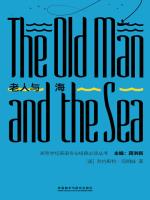
The Old Man and the Sea reads like a condensed yet powerful prose epic,
using the simplest of narratives to outline the deepest dimensions of
the human spirit. The story is strikingly simple: after eighty-four days
without a catch, the old Cuban fisherman Santiago ventures far out to
sea alone, engages in a life-and-death struggle with a giant marlin for
three days and nights, and returns with nothing but a skeleton stripped
clean by sharks. Yet within this simple framework, Hemingway pours in
eternal themes of courage, dignity, solitude, and existence. “A man can
be destroyed but not defeated”—this core line echoes throughout the
entire work. Santiago’s battle is not merely against the fish or the
sea; it is a lonely dialogue between human will and indifferent nature.
Even when all tangible gains are lost, the old man retains an undefeated
spiritual dignity. His persistence, his respect for his opponent, and
the profound bond formed through struggle elevate this story from a mere
adventure tale to a modern parable of human resilience. Hemingway’s
prose is sharp, clean, and penetrating, like the fishing line cutting
through the deep sea. There are no lengthy psychological descriptions,
yet Santiago’s exhaustion, determination, and fleeting moments of doubt
are palpable between the lines. The ocean becomes a mirror of
fate—sometimes calm, sometimes raging, yet always vast enough to hold
both human insignificance and greatness. The Old Man and the Sea won
Hemingway the Pulitzer Prize in 1953 and greatly contributed to his
Nobel Prize in Literature the following year. Yet more importantly, it
offers every reader a quiet yet powerful inner strength. In an era
filled with uncertainty and anxiety, Santiago reminds us: true victory
lies not in the trophy we bring back, but in the unyielding posture we
maintain in the struggle itself.

 京公网安备 11010802032529号