

Book Review
用户863102
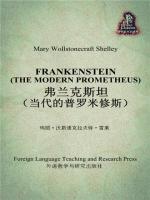
Mary Shelley’s Frankenstein is far more than a classic Gothic horror
novel—it is a timeless, deeply philosophical tragedy about creation,
responsibility, ambition, and what it truly means to be human. First
published in 1818, this groundbreaking work remains shockingly relevant
today, forcing readers to confront the dangers of unchecked scientific
progress and the cruelty of a society that judges only by appearance.
The novel follows Victor Frankenstein, a brilliant and obsessive young
scientist who unlocks the secret of reanimating dead matter. Driven by
ambition and a desire to conquer death, he assembles a humanlike
creature and brings it to life. But horrified by its grotesque
appearance, Victor abandons his creation immediately, refusing to accept
any duty toward the being he has made. What follows is a devastating
chain of suffering, loneliness, and revenge. The Creature—often
mistakenly called “Frankenstein”—is the novel’s most tragic and complex
character. Though physically terrifying, he starts as gentle, curious,
and eager to love and be loved. He learns language, observes human
kindness, and yearns for acceptance. Yet everywhere he goes, he meets
fear, violence, and rejection solely because of his looks. Gradually,
the loneliness and hatred push him toward anger and violence. His famous
line, “I was benevolent and good; misery made me a fiend” lays bare the
novel’s core truth: society’s cruelty, not nature, turns beings into
monsters. Victor Frankenstein, by contrast, is the real tragic
hero—and the real moral failure. He is intelligent and idealistic, but
his pride and fear make him irresponsible. He creates life without
considering the consequences, abandons his “child” when it does not fit
his vision, and spends years running from guilt instead of facing it.
His ambition destroys everyone he loves: his brother William, his friend
Clerval, his wife Elizabeth, and finally himself. The novel powerfully
warns that knowledge without morality is self‑destructive. Shelley’s
writing is atmospheric, emotional, and intellectually sharp. Using a
frame narrative—letters from explorer Robert Walton—she builds tension
slowly while exploring deep themes: - The ethics of creation: Creators
owe care to what they bring into the world. - Prejudice and appearance:
Beauty does not equal goodness, nor ugliness evil. - Loneliness and
connection: All beings need love to remain humane. - Ambition without
limit: Scientific progress must be guided by responsibility. One of
the book’s greatest strengths is that it does not simplify good and
evil. Both Victor and the Creature are sympathetic and flawed. Readers
feel pity for the abandoned Creature and frustration at Victor’s
cowardice, making the ending deeply moving rather than merely scary.
If the book has a weakness, it is that some parts feel melodramatic or
rushed, especially in the later tragedies. But these flaws are minor
compared to its emotional and intellectual power. More than 200 years
later, Frankenstein is still essential reading. It speaks directly to
modern debates about genetic engineering, artificial intelligence, and
technological ethics: What are we willing to create? And what do we owe
to what we create? Final Verdict Frankenstein is a masterpiece of
Gothic literature and a cornerstone of early science fiction. It is
haunting, tragic, and endlessly thought‑provoking. I highly recommend it
to anyone who loves deep, character‑driven stories that challenge the
mind and touch the heart.

 京公网安备 11010802032529号