

sss
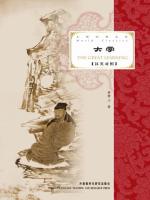
Book Review: The Great Learning
As one of the Four Books of Confucianism, The Great Learning (Da Xue) stands as a timeless cornerstone of Chinese philosophy and moral education. Attributed to Zengzi and compiled from the Book of Rites, this concise yet profound classic, with merely over 1,700 Chinese characters, is far more than an ancient literary work. It serves as a systematic and practical guide for personal self-cultivation, family harmony, and social governance, shaping the values of Chinese civilization for more than two thousand years.
The core philosophy of The Great Learning centers on three fundamental principles: manifesting luminous virtue, renewing the people, and abiding in the highest good. These three ideals lay the ultimate goal of Confucian learning, distinguishing “great learning” for moral maturity from trivial learning for personal gain. What makes this book extraordinary is its clear, logical eight-step cultivation system, which builds an unbreakable chain from individual improvement to universal peace. The sequence — investigating things, extending knowledge, making intentions sincere, rectifying the mind, cultivating oneself, regulating the family, governing the state, and pacifying the world — reveals a core Confucian belief: social order and public virtue always originate from individual moral perfection.
Unlike other Confucian classics filled with scattered dialogues and fragmented teachings, The Great Learning presents a rigorous and hierarchical ideological system. It solves a key problem in moral practice: how ordinary people can move from inner spiritual cultivation to external social responsibility. The book emphasizes that all external achievements are rooted in internal self-discipline. A disturbed mind, insincere intentions, or superficial knowledge will inevitably lead to flawed personal conduct, chaotic family relations, and ineffective governance. This view breaks the illusion of empty ambition and teaches readers that great causes start with trivial self-cultivation in daily life.
From a modern perspective, the value of The Great Learning remains irreplaceable. In an era filled with impetuosity, utilitarianism and instant gratification, its teachings remind modern people of the essence of learning and life. “Knowing the state of rest brings stability; stability brings calmness; calmness brings deliberation; deliberation brings achievement” offers a precious spiritual guideline for contemporary youth trapped in anxiety and confusion. It tells us that true growth is not blind pursuit of speed and success, but steady accumulation of knowledge, sincere inner cultivation and consistent behavioral self-discipline.
Admittedly, rooted in ancient feudal society, some political thoughts in the book carry historical limitations and cannot be fully copied into modern social governance. However, its core spirit of self-cultivation, responsibility and benevolence transcends time and regional boundaries. It is not merely a classic of ancient Chinese education, but a universal textbook for personal growth.
In conclusion, The Great Learning is a masterpiece that integrates personal ethics, family ethics and social ethics. It does not preach grand and empty theories, but provides actionable rules for life and learning. For modern college students, reading this classic is not only a way to understand traditional Chinese culture, but also an opportunity to reshape personal values. It teaches us that the greatest learning in life is to polish one’s virtue, discipline one’s behavior, and ultimately realize self-worth while contributing to society.

 京公网安备 11010802032529号