


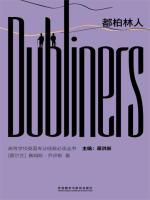
都柏林人
桂圆没有果汁
Book Review: Dubliners by James Joyce James Joyce’s Dubliners, a
collection of fifteen short stories published in 1914, serves as a
penetrating literary dissection of early 20th-century Dublin and its
people’s existential predicament. Departing from dramatic plots and
romantic narratives, Joyce adopts a restrained, minimalist writing
style, depicting the trivial daily lives of ordinary Dubliners ranging
from children and teenagers to adults and the elderly. Centered on the
core theme of spiritual paralysis, the collection exposes the stagnant
social atmosphere of Dublin trapped by religion, tradition and colonial
shackles. Each independent story interweaves to form a complete portrait
of the city, revealing how trivial life trivializes people’s dreams,
stifles their vitality, and traps them in endless confusion, hesitation
and disillusionment. Among all chapters, Araby, a representative story
in the childhood section, perfectly embodies Joyce’s unique narrative
techniques, exquisite symbolic imagery and the pervasive spiritual
paralysis of Dublin, becoming the microcosm of the whole collection.
Joyce adopts a first-person retrospective child narration, a core
narrative skill of the childhood series, which creates a sharp contrast
between innocent juvenile perception and cruel adult reality, and subtly
completes the interpretation of the paralysis theme. The whole story
is constructed around a young boy’s romantic illusion and final thorough
epiphany. Living on the dark, dull North Richmond Street, the boy leads
a monotonous and lifeless daily life. The gloomy residential
environment, cold winter air and idle neighbors all build a stagnant
living atmosphere, which is the external embodiment of Dublin’s overall
spiritual paralysis. For the ignorant boy, Mangan’s sister is the only
light in his dull life, and the distant Araby bazaar becomes his
spiritual sustenance and symbol of beauty, freedom and exotic dreams. He
regards going to Araby as a sacred pilgrimage, eager to break free from
the trivial and suffocating daily life through this journey. Joyce’s
elaborate symbolic run through the whole story deepens the theme
profoundly. The dim, dead-end street symbolizes the closed and hopeless
living state of Dubliners; the delayed uncle and indifferent adults
represent the numb and paralyzed spiritual state of the whole society.
Most critically, the Araby bazaar, which carries all the boy’s romantic
fantasies, turns out to be a desolate, noisy and tacky place. The
trivial flirtation of vendors and the deserted scene completely shatter
his beautiful illusion. This sharp symbolic contrast fully interprets
the core connotation of spiritual paralysis: the people of Dublin are
not only trapped in material triviality, but also completely stifled in
spirit, unable to realize their dreams, and doomed to disillusionment in
every pursuit. Moreover, Joyce’s unique “epiphany” narrative technique
reaches perfection in Araby. The boy’s enthusiastic expectation and
devout pursuit in the early story accumulate all emotions, while the
final moment of disillusionment triggers a sudden spiritual awakening.
He suddenly realizes the vanity of his pursuit and the hopeless
stagnation of his living environment. Different from ordinary
coming-of-age stories with growth and progress, this epiphany does not
bring strength and liberation, but makes him fall into deeper confusion
and despair. This exactly reflects the essence of Dublin’s spiritual
paralysis: all yearnings and struggles are futile, and individuals can
only be trapped by the rigid social environment and become victims of
collective spiritual numbness. Through the child’s personal experience,
Joyce incisively reveals that spiritual paralysis has penetrated every
age group and every corner of Dublin’s life. Dubliners occupies an
epoch-making position in the development of modern short stories, and
Joyce’s unique writing techniques and thematic creation have profoundly
influenced modern literary creation. Abandoning the traditional dramatic
conflict and happy ending of short stories, he pioneered the epiphany
narrative mode centered on spiritual awakening and inner change,
shifting the focus of short story creation from external plot narration
to internal spiritual exploration of characters. His subtle symbolic
writing and trivial daily narration construct a unique modern literary
aesthetic, enabling short stories to carry profound social criticism and
humanistic thinking. More importantly, the spiritual paralysis theme
summarized by Joyce breaks the limitation of regional stories. It not
only reflects the survival dilemma of Dubliners in the specific era, but
also reveals the universal spiritual predicament of modern people
trapped by trivial life and rigid society. As a pioneering modern short
story collection, Dubliners has provided endless inspiration for later
modernist writers and established the classic paradigm of modern
realistic short story creation.

 京公网安备 11010802032529号